Figuring out how to decorate a living room can feel like a balancing act between a space that looks thoughtfully styled and one that feels unintentionally cluttered. Most people want personality without overcrowding and comfort without visual noise.
The truth is that when everything tries to stand out, nothing really does. The living rooms that feel the most inviting and intentional are not filled with endless décor. They are carefully edited spaces where each piece has a purpose and enough room to be appreciated.
At its core, a living room should be a place where people can gather, relax, and enjoy one another’s company. It needs to function well for everyday life while still reflecting your style and taste.
This guide will walk you through how to decorate your living room step by step, from selecting the foundational elements to adding those final thoughtful touches that bring the entire space together.
Understanding the Difference Between Curated and Cluttered
Before you start rearranging furniture or shopping for something new, it helps to understand what truly separates a well designed room from one that feels overwhelming. The difference is not about how much you own, but about how intentionally you use it. Learning to recognize this distinction makes every decorating decision clearer and more confident.
What Makes a Space Feel Curated
Curated design is the artful assembly of furnishings and artifacts that work together intentionally. Think of it as selecting items that weave into a specific theme or concept. This creates a living space that feels both cohesive and personal. Each piece you choose should tell part of your story and reflect your experiences and personality rather than fill empty corners.
The difference matters when learning how to decorate a living room. Messy clutter is the accumulation and overflow of stuff. Curated spaces showcase beloved objects and collections in a lived-in way that reveals who you are. A curated interior blends function with soul. It chooses pieces that look beautiful together and support your daily habits.
Common problems emerge when rooms lack this intentional approach. Spaces feel disjointed without a clear direction or cohesive theme. Beautiful furniture that doesn’t serve your actual needs creates frustration. You select pieces in isolation without thinking about how they relate to each other, and rooms feel more like furniture showrooms than homes. Scale issues compound the problem. Gorgeous pieces are wrong for the space and make rooms feel cramped or empty.
The goal when you decorate your living room is creating breathing room so your personality and joy have space to stretch. Designers look at layers, habits, and clues about how a space works. Good design comes from paying attention to the life happening inside the room and shaping the layout around how you live.
The Role of Restraint in Design
Restraint isn’t emptiness. It’s intention. Choosing one perfect material over many, leaving a wall bare so light can speak, asking what needs to be here and what doesn’t. Restraint becomes a creative tool through distillation. It takes a feeling and resolves it into space, flow, and form.
True restraint comes from confidence, not indecision. It takes experience to say “we don’t need more here” and vision to leave space for something to breathe. Restraint shows up in material selection using fewer natural finishes, furniture curation selecting pieces with presence rather than noise, and negative space designed as intentionally as filled areas.
Negative space isn’t empty. It’s intentional. Leaving space around key elements allows the eye to rest and brings focus to what matters. A single piece of art or a light fixture becomes more meaningful when it has space to shine. You’re not competing with clutter, so materiality becomes the star.
Restraint keeps design grounded. It expands your ability to make decisions purposefully, respect materials, and prioritize what will matter years from now.
How to Decorate Your Living Room: Start With the Essentials
You need to nail down the simple fundamentals before layering in personality. These foundational decisions shape everything that follows.
Choose the Right Size Rug
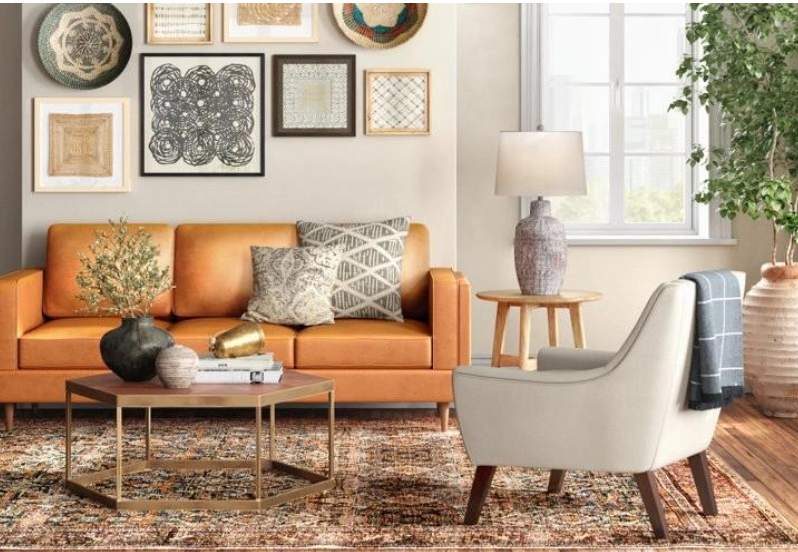
Rug size makes or breaks a room’s proportions. Typical living room rug sizes are 8’x10′ and 9’x12′. Your rug should be at least 6 inches wider (8 inches is ideal) than your sofa on both sides. Measure your seating area before shopping and get the closest size up from that measurement.
The cardinal rule: be consistent with leg placement. If your sofa’s legs are on the rug, have the chair legs on as well. All on or all off. Inconsistent placement chops up the conversation area. Leave at least 6 to 18 inches of space between the rug’s edge and the wall for balanced proportions.
Select Foundational Furniture Pieces
Your sofa anchors the whole room. Mix furniture weights thoughtfully. Designers who select two sofas choose one with a heavyweight base and one with exposed legs. This weight distribution prevents monotony.
The coffee table decision matters just as much. If you’ve chosen heavy-weight seating or your room is smaller, gravitate toward coffee tables with lighter, open bases. Choose a bulkier, more solid coffee table with leggy, lightweight seating pieces. Side tables and accent seating follow the same principles.
Establish Your Color Palette
Start with the 60-30-10 rule: choose a dominant color covering 60 percent of the room, a secondary color for 30 percent, and an accent color for the remaining 10 percent. Your color selection should reflect the mood you want to achieve.
Lighting affects how colors appear. Rooms with southern or western exposure benefit from cooler hues to balance strong natural sunlight. Test paint samples before committing, as lighting and other factors alter how colors look in your specific space.
Create a Conversation Area Layout
Designers favor a two-to-one ratio because it creates symmetry with variety: one sofa grounding the space, two chairs balancing that mass without overwhelming the room. Seating should face or angle toward each other to encourage conversation, creating a circle or U-shape rather than a straight line.
Keep seating within eight to 10 feet apart so people can talk without raising their voices. Leave roughly 18 inches between your sofa and coffee table, enough room to stretch your legs while still reaching your drink.
Edit and Curate Your Living Room Decor
Once your foundational pieces are in place, the real transformation happens through thoughtful editing. Most living rooms benefit from having less on display, not more. A carefully curated space feels calm, intentional, and welcoming because every element has been chosen with care.
Use these simple principles to refine your living room and create a space that feels polished rather than crowded:
- Remove items that do not serve a purpose
Start by clearing anything that does not add function or meaning. Small accessories can quickly create visual noise, so focus on keeping fewer, more impactful pieces. When you display only what you truly enjoy, the room immediately feels more intentional. - Apply the rule of three
Grouping objects in threes creates natural balance. A book, candle, and small decorative object styled together often looks more cohesive than scattered items. Vary heights and sizes to keep arrangements visually interesting. - Give your favorite pieces breathing room
Negative space allows standout items to shine. Leaving some surfaces and walls partially open makes the entire room feel lighter and more refined while drawing attention to what matters most. - Balance visual weight throughout the room
Every piece has visual weight. Heavier materials or bulky furniture should be balanced with lighter textures or open space. Step back and observe the room as a whole to ensure one side does not feel heavier than the other. - Use trays and storage to corral smaller items
Trays help group everyday objects and reduce visual clutter. A well sized tray on a coffee table or console keeps essentials organized while still feeling decorative and intentional. - Rotate decor seasonally
You do not have to display everything at once. Rotating accessories throughout the year keeps your space feeling fresh and prevents surfaces from becoming overcrowded. This also helps you appreciate each piece more when it returns to display.
Add Finishing Touches With Intention
The finishing layer separates rooms that feel complete from those that feel unfinished.
Layer Textures Without Overdoing It
Mix two to three dominant textures with subtle accents. Keep a consistent color palette so the room feels unified. Balance smooth and rough surfaces with purpose. A velvet sofa pairs well with a raw wood coffee table or industrial metal lamp. This contrast adds depth without overwhelming the space.
Style Throw Blankets With Purpose
Throw blankets add warmth and texture when you style them with intention. Fold them lengthwise then in half, separate those halves slightly, then lay them onto your seat cushion under throw pillows. Drape throws over the arm or back of your sofa to create a relaxed vibe. Choose throw colors that already appear somewhere in the room, such as pillows, rugs, or artwork.
Add Lighting at Multiple Heights
Lighting changes the way we notice a space. Layer sconces, table lamps, and floor lamps to create balanced, inviting atmosphere. Different heights make your room look interesting and balance light throughout. Light people from different angles. Cold, uninviting rooms usually have lighting problems, not architectural ones.
Display Art and Personal Items With Care
Art and meaningful objects deserve thoughtful placement so they enhance the room rather than compete with it. When displaying large paintings for wall, hang them at approximately five feet on center, with the middle of the piece at eye level between 57 and 64 inches. This creates a balanced, gallery like effect that feels natural in everyday living.
For a more relaxed look, you can lean framed pieces against the wall on a console table or shelf to create a layered display. Whether hung or styled casually, choose artwork and mementos that carry personal meaning. These are the pieces that give your living room warmth, character, and a sense of story.
Conclusion
You now have everything you need to revolutionize your living room from chaotic to curated. The secret isn’t buying more. It’s editing better, choosing with intention, and giving your favorite pieces room to breathe.
Begin with your foundational pieces, then edit without mercy. Above all, note that restraint creates a powerful effect. Each item should earn its place through function or meaning.
Your curated living room is waiting. Begin editing today and watch your space revolutionize completely.
 Founder & CEO
Irenee Nunezerro is the visionary founder and CEO of Luxe House Maker, with over 15 years of experience in luxury real estate and interior design. Known for her expertise in blending opulence with innovation, Irenee launched Luxe House Maker to provide readers with comprehensive updates on the latest trends in high-end properties, interior décor, and smart home technology. Her passion for creating luxurious, technologically advanced spaces has positioned Luxe House Maker as a leading resource for those seeking to elevate their lifestyles. Irenee’s commitment to delivering cutting-edge content ensures that Luxe House Maker stays at the forefront of the luxury market.
Founder & CEO
Irenee Nunezerro is the visionary founder and CEO of Luxe House Maker, with over 15 years of experience in luxury real estate and interior design. Known for her expertise in blending opulence with innovation, Irenee launched Luxe House Maker to provide readers with comprehensive updates on the latest trends in high-end properties, interior décor, and smart home technology. Her passion for creating luxurious, technologically advanced spaces has positioned Luxe House Maker as a leading resource for those seeking to elevate their lifestyles. Irenee’s commitment to delivering cutting-edge content ensures that Luxe House Maker stays at the forefront of the luxury market.